What Is Pornography Doing for You? How One Question Helped Change My Life
Guest post by Sean Brennan, AACC, PSAP
For years, I asked the same question that countless men ask when they begin trying to overcome pornography: “How do I stop?”
I swore every time I acted out was the last time, so every relapse left me feeling more discouraged than the one before. If discipline and determination were enough for me to succeed in other aspects of my life, why couldn’t I seem to win this battle?
Table of Contents
- I was a high achiever wondering why can’t I quit porn.
- One pivotal question was the turning point in my struggle with addiction.
- I discovered many answers to that question with honest self-reflection.
- Almost every porn addict shares one thing in common.
- Though pornography feels like an escape, it cannot fix our underlying longings.
- Your longings reveal you were created for something more.
- I began asking a porn recovery question vital to every Christian.
- Steps I use that can help you discover a true identity shift.
- So let me leave you with three questions to consider:
- Connect with Sean Brennan
I was a high achiever wondering why can’t I quit porn.
That question was especially frustrating because self-discipline had defined much of my life. I had graduated from The Citadel, served in the 82nd Airborne Division, the 75th Ranger Regiment, and the 7th Special Forces Group before becoming an FBI Special Agent. Over the course of my career, I deployed repeatedly to Iraq, Afghanistan, Pakistan, and other high-threat environments, eventually serving as the FBI’s Country Director for Iraq during the war against ISIS. My career demanded perseverance, sacrifice, and the ability to endure hardship. Yet despite all of that, I repeatedly found myself losing a battle that I desperately wanted to win.
For years, I concluded that something must simply be wrong with me. Everything began to change when someone asked me a question I had never considered before.
One pivotal question was the turning point in my struggle with addiction.
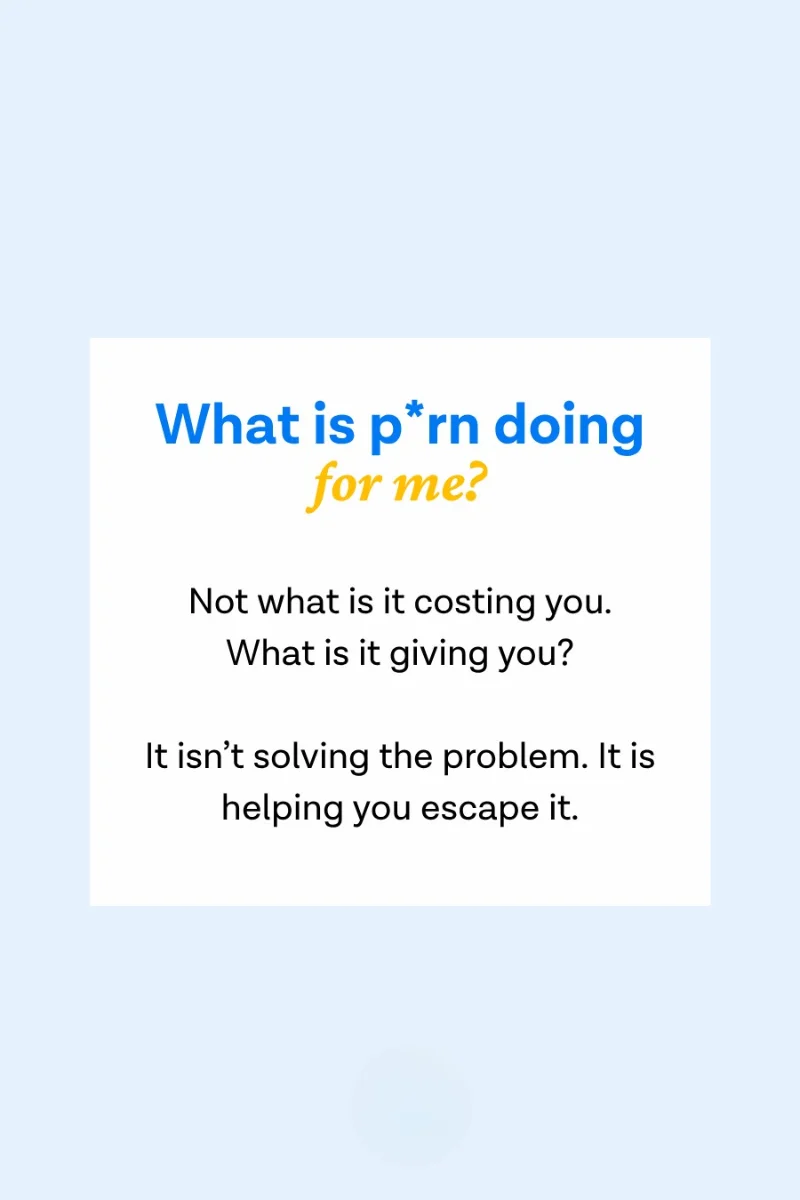
“What is pornography doing for you?”
At first, I honestly didn’t understand what they meant. My immediate reaction was, “It’s ruining my life.” That answer wasn’t wrong, but it wasn’t really answering the question. They weren’t asking what pornography was costing me. They were asking what it was giving me that kept me coming back.
That question stayed with me because, if I was honest, pornography had been doing something for me. It wasn’t making my life better. It wasn’t bringing me closer to God or strengthening my marriage. But it was the solution to something. Otherwise, why would I keep returning to it despite hating it?
I discovered many answers to that question with honest self-reflection.
As I began to reflect on my own story, I realized that pornography had become much more than a sexual habit. Whenever I felt overwhelmed, ashamed, anxious, lonely, or inadequate, it offered me a temporary escape from those feelings. For a few moments, the pressure lifted. The relentless striving stopped. The voice reminding me that I wasn’t enough grew quiet, briefly.
That realization forced me to confront something I had never understood before. I wasn’t simply pursuing pornography. I was pursuing what pornography provided, something that I obviously needed otherwise it would have been easy to stop.
Almost every porn addict shares one thing in common.
Today, one of the questions I ask many of the men I work with is, “What is pornography doing for you?” At first, the question catches them off guard. They expect me to ask what they looked at, how often they relapsed, or whether they have accountability in place. Instead, we begin exploring what was happening in their hearts before they ever opened a browser.
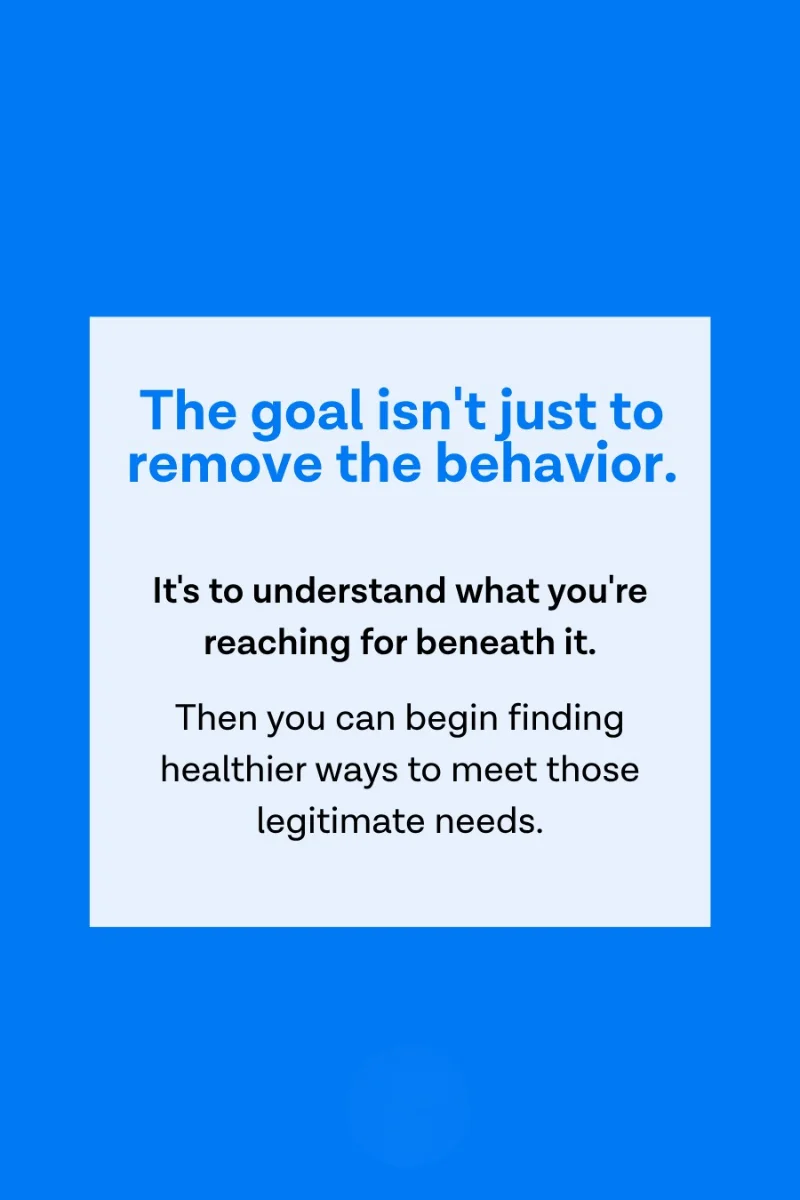
As the conversation unfolds, a pattern almost always begins to emerge. Beneath the pornography is often loneliness, shame, rejection, fear, exhaustion, disappointment, or a deep sense of inadequacy, which often started in childhood. The pornography wasn’t creating those feelings. It was helping them escape them, if only for a little while.
Beneath the pornography is often loneliness, shame, rejection, fear, exhaustion, disappointment, or a deep sense of inadequacy, which often started in childhood.
That realization changed the way I think about addiction. Pornography isn’t serving a legitimate need, because we somehow need pornography. Rather, it is attempting to meet legitimate human needs in an illegitimate and destructive way.
Every one of us longs for acceptance, significance, peace, intimacy, comfort, security, and relief from emotional pain. Those longings are not weaknesses to be ashamed of, they are part of being human. In many ways, they are gifts from God that point us toward our need for Him. The problem begins when we ask something created to satisfy needs that ultimately point beyond creation itself.
Looking back, I realized pornography wasn’t the only place I had made that mistake.
In my previous article, The Ambition of Shame, I described how I spent decades pursuing one accomplishment after another in the Army and the FBI. At the time, I genuinely believed I was simply ambitious and driven to serve my country. Those motivations were real, but they weren’t the whole story.
Every difficult assignment, every promotion, every deployment, every award, and every increase in responsibility produced something remarkably similar to what pornography produced. For a brief moment, I felt significant. For a brief moment, I felt like I had finally become enough. Then the feeling faded, and I found myself searching for the next accomplishment that might finally quiet the shame I had carried since childhood.
That was the moment I began to understand that my career and my pornography addiction weren’t competing with one another. They were cooperating.
One allowed me to feel significant in public. The other allowed me to escape in private. Both were trying to satisfy the same legitimate longings. Both offered temporary relief. Neither offered lasting peace.
Though pornography feels like an escape, it cannot fix our underlying longings.
Centuries ago, the Christian Theologist, Augustine wrote, “You have made us for Yourself, O Lord, and our hearts are restless until they rest in You.” Whether or not someone shares Augustine’s Christian faith, I think he identified something profoundly human.
Centuries ago, the Christian Theologist, Augustine wrote, "You have made us for Yourself, O Lord, and our hearts are restless until they rest in You."
We all carry a restlessness that drives us to search for something, or someone, to make us feel whole. Some people look for it in success. Others in relationships, money, adventure, achievement, or pornography. I spent decades looking for it in both achievement and pornography, never realizing that neither was capable of giving me what I was asking them to provide.
As my own recovery continued, I realized that what I had experienced wasn’t unique to me. Although every man’s story is different, a common pattern began to emerge in the lives of many of the men I worked with. One turned to pornography after conflict with his wife because it helped him escape the pain of rejection. Another used it to quiet anxiety after difficult days at work.
Others described using pornography to cope with loneliness, exhaustion, grief, or the relentless pressure of feeling like they were never enough. Pornography wasn’t creating those struggles. It was temporarily helping them escape them.
Your longings reveal you were created for something more.
Those desires aren’t weaknesses or evidence that something is wrong with us. They’re part of how God created us. The question isn’t whether we have those longings. The question is where we take them.
As my understanding of Scripture deepened, I realized the Bible had already described my struggle. In Romans 1:25, Paul writes that humanity “exchanged the truth about God for a lie, and worshiped and served created things rather than the Creator.” I never would have said I worshiped my career or pornography, but I was asking both to give me something only God could provide.
I looked to my career to tell me I was enough and to pornography to help me forget that I believed I wasn’t. One gave me significance. The other gave me an escape. Neither could give me lasting peace, because neither was designed to carry the weight of my identity.
I began asking a porn recovery question vital to every Christian.
That realization changed the way I understood repentance. It wasn’t simply turning away from pornography. It was turning away from every counterfeit source of identity and security I had trusted instead of God. The turning point came when I stopped asking, “How do I stop looking at pornography?” and began asking, “What am I asking pornography to do for me that only God can do?”
For me, that question eventually led to the gospel. Romans 5:8 says, “God demonstrates His own love for us in this: While we were still sinners, Christ died for us.” I finally realized that Christ wasn’t waiting for me to conquer pornography before He loved me.
Steps I use that can help you discover a true identity shift.
My identity wasn’t something I earned through achievement, ministry, or recovery. It was something I received through His grace. That truth didn’t simply change my behavior; it changed the reason I no longer needed pornography to tell me what only God already had.
Today, when I sit with a man struggling with pornography, I eventually ask him the same question that changed my life: “What is pornography doing for you?”
I ask this not because I want to justify the behavior, but because understanding what pornography is trying to accomplish often reveals the deeper wound beneath it. Once we identify that wound, we can begin replacing counterfeit solutions with the One who can actually satisfy the longings of the human heart.
So let me leave you with three questions to consider:
- What is pornography doing for you that keeps drawing you back?
- What legitimate human need are you asking porn to meet?
- What would it look like to answer that need through a relationship with Jesus Christ and in community with a group of believers seeking to live out the freedom Christ won for us on the cross?

Connect with Sean Brennan
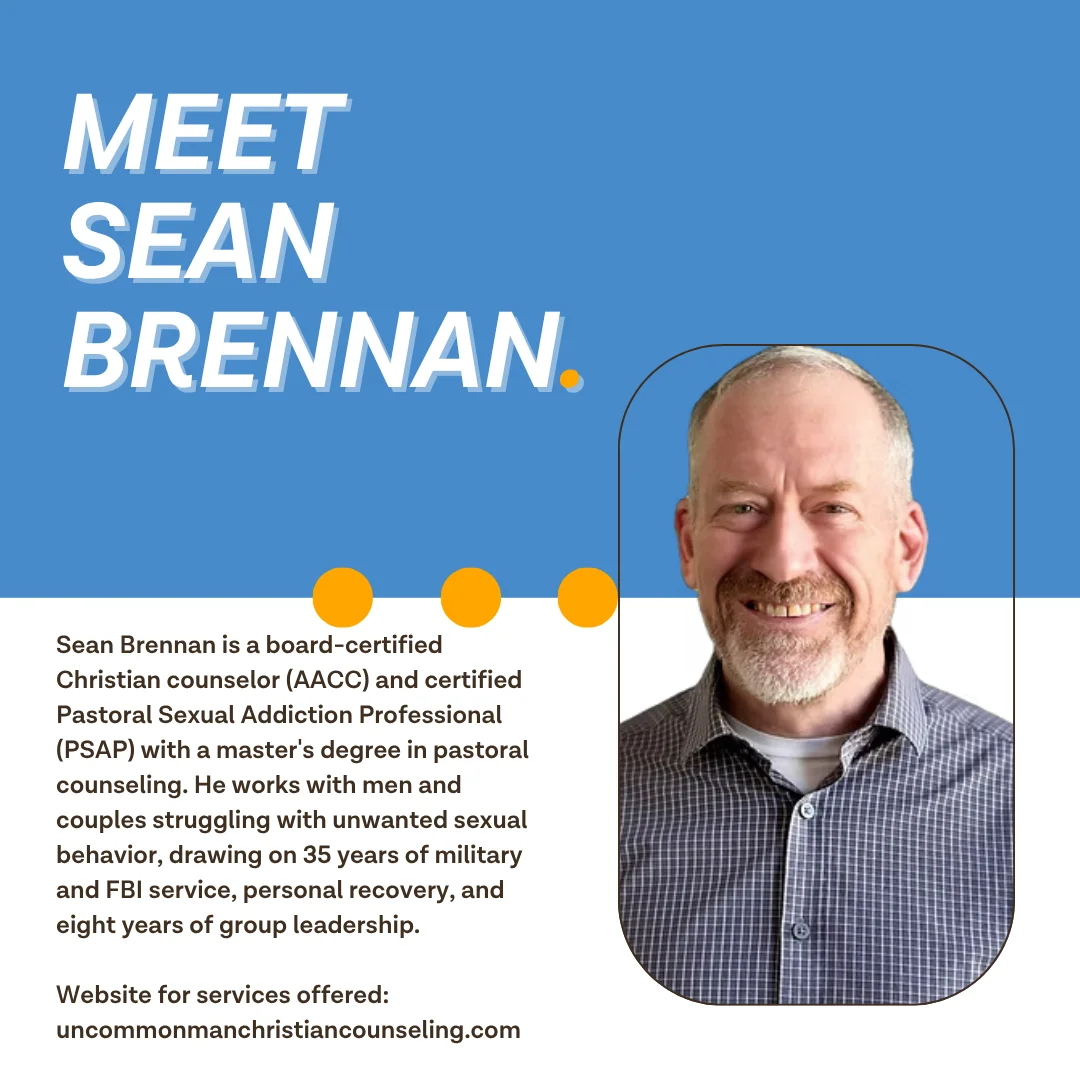
Sean Brennan is a board-certified Christian counselor (AACC) and certified Pastoral Sexual Addiction Professional (PSAP) with a master’s degree in pastoral counseling. He works with men and couples struggling with unwanted sexual behavior, drawing on 35 years of military and FBI service, personal recovery, and eight years of group leadership.
He offers free initial consultations and works with men, with a special focus on veterans, first responders, and military personnel. Sean also helps couples seeking help healing from damage associated with unwanted sexual behavior.
Website: uncommonmanchristiancounseling.com