
Can Sex Ed Prevent Porn Addiction? What Parents Need to Know
Guest post by Kristen Miele, founder of Sex Ed Reclaimed
The average age of children who are first exposed to online pornography is before or around 11 years old. For many kids, pornography becomes their first teacher about bodies, relationships, intimacy, and expectations. In our world, porn is the largest sex educator there is.
Table of Contents
- Porn As A Sex Ed Teacher Vs. Actual Sex Ed
- Why Are Kids So Vulnerable to Porn Addiction?
- The Brain Science: How Porn Affects Children and Teens
- What Does Sex Ed Teach? An Age-Appropriate Guide
- Sex Ed and Porn Addiction: Information Builds Immunity, Not Vulnerability
- Porn Literacy Is a Protective Factor
- What Parents Can Do: Start the Conversation Before Porn Does
- Build Media Literacy Skills
- Use Resources and Accountability
- Conclusion
- About Kristen Miele
Porn As A Sex Ed Teacher Vs. Actual Sex Ed
Research shows that those who receive age-appropriate sex education are better equipped to think critically about pornography, less likely to develop compulsive use, and more likely to go to trusted adults when they encounter it.
That matters because pornography is not something children have to seek out, since it often comes up uninvited on devices. It reaches them through social media, gaming platforms, group chats, ads, or algorithm-driven content. As parents, we can’t control children, but we can give them a framework to criticize what they see instead of absorbing it like everyone else in culture.
As a sex educator, I’ve lost count of how many people I’ve spoken with who were exposed to porn years before an adult ever talked to them about sex. I’ve sat across from teens who genuinely believed porn reflected what healthy relationships should look like, because no one had ever told them otherwise. Many weren’t looking for it either! They stumbled across it, felt confused or curious, and then carried those images and questions alone.
That’s why conversations about sex cannot wait until we think our kids are “ready.” Culture is already discipling them. The question is whether parents will step into that space first with truth, context, and trust.
Why Are Kids So Vulnerable to Porn Addiction?
A 2023 report from Common Sense Media found that 73% of teens ages 13–17 have watched online pornography, and more than half encountered it before age 13. Even more concerning, 59% of exposures were accidental.
Fight the New Drug reports that pornography exposure is trending younger. Plus, the billion-dollar porn industry wants consumers addicted or obsessed at a young age — this makes a lifelong customer who is more likely to spend time and money on the product.
75% of parents think their child has never seen porn. In reality, over 50% of children report watching it. Plus, kids believe porn is realistic, affecting their future sexual behaviors.
The Brain Science: How Porn Affects Children and Teens
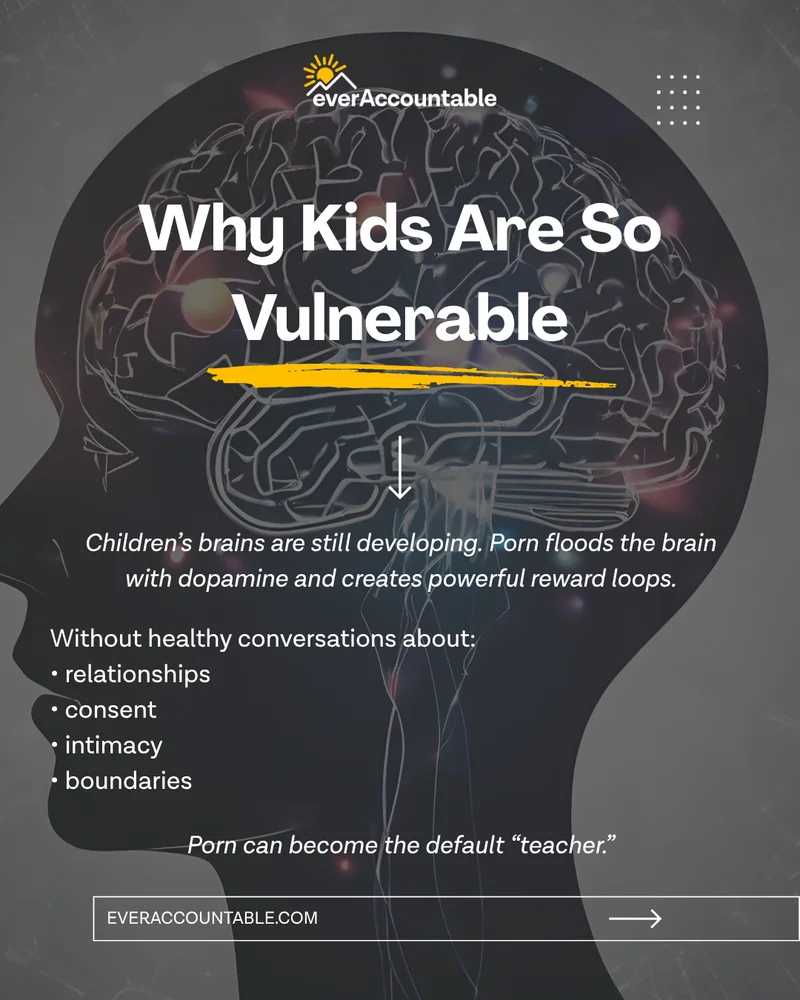
Children and adolescents are especially vulnerable because their brains are still developing. The prefrontal cortex — an area responsible for decision-making, impulse control, and long-term reasoning — matures slowly throughout our adolescence.
Pornography delivers intense novelty and dopamine stimulation, creating powerful reward loops in developing brains. When repeated exposure happens before healthy relational and sexual frameworks are formed, pornography majorly shapes expectations about intimacy, bodies, consent, and so much more.
Without a competing education grounded in healthy or holy behaviors, pornography often becomes the default reference point for sex and relationships. Is this what we want for our kids?
What Does Sex Ed Teach? An Age-Appropriate Guide
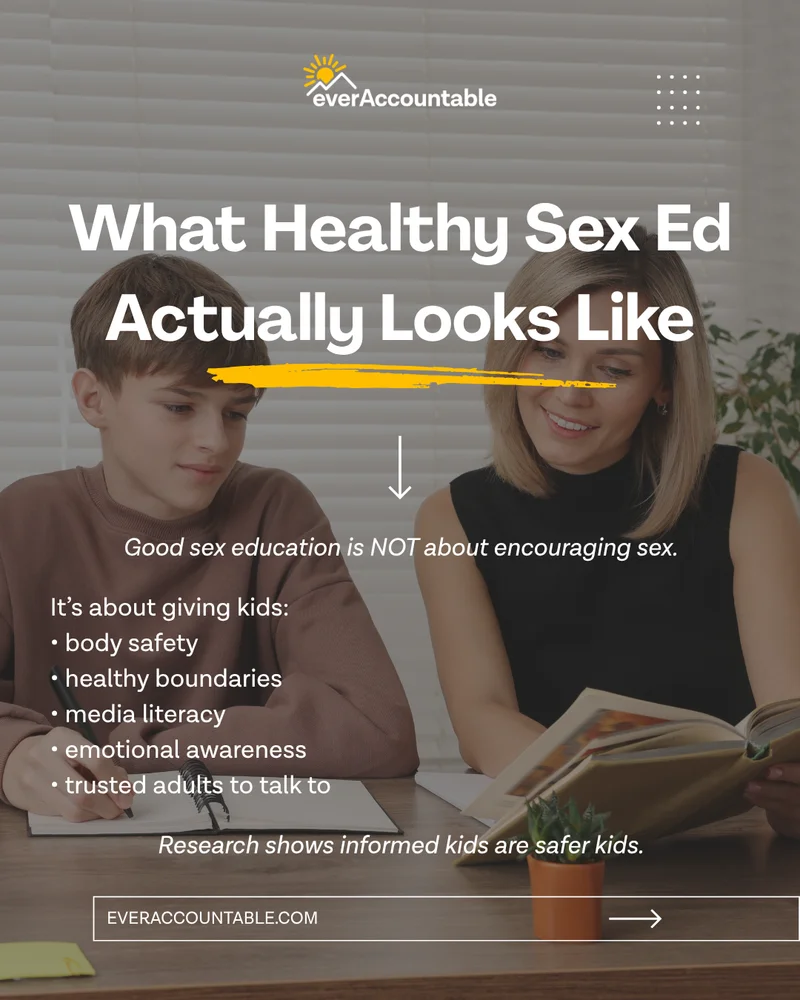
For many parents, the phrase “sex education” raises concerns. But quality sex education is not about encouraging sexual behavior. Instead, it equips children with information, boundaries, communication skills, and other tools that protect them or prevent future issues in their lives. As a sex education teacher for the last 16 years, here are my practical conversation topics broken down by age:
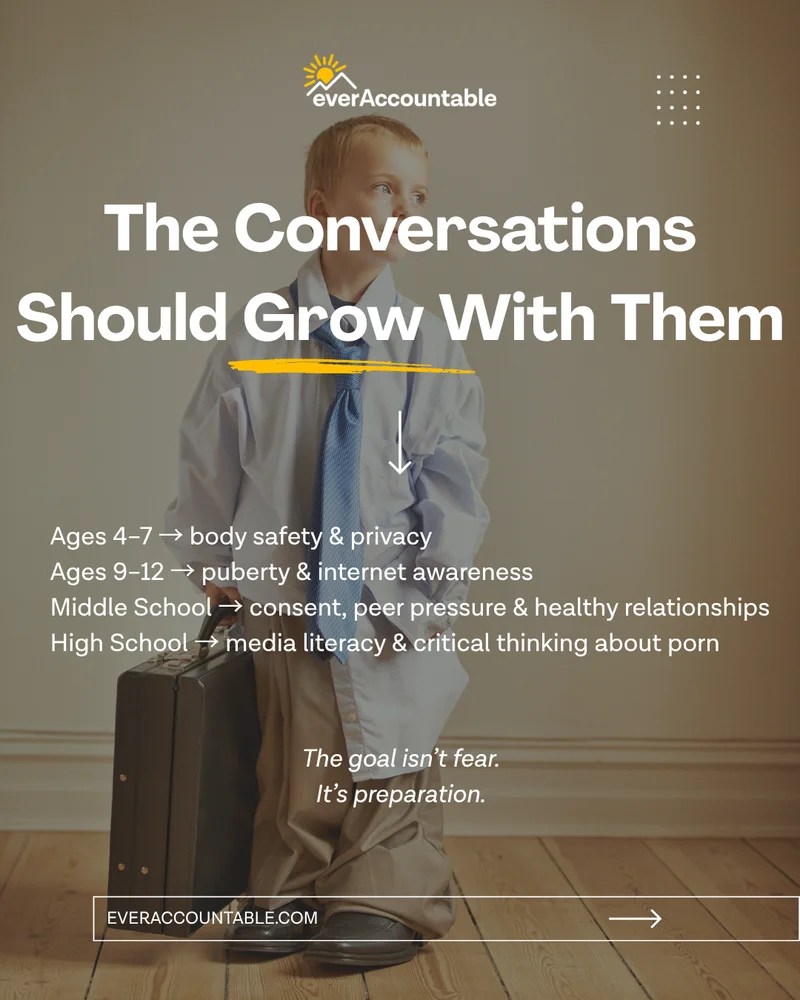
Early Elementary (Ages 4–7)
Children learn body autonomy, anatomical names, privacy boundaries, basic respect, germ prevention, and how to identify uncomfortable situations. Conversations around books like Good Pictures Bad Pictures help create calm, age-appropriate language for discussing pornography before exposure occurs.
Preteen (Ages 9–12)
Kids need medically accurate information about puberty, reproduction, and emotional development before the internet fills in the gaps. When parents avoid these conversations, children search online where pornography is easily encountered.
Middle School
At this stage, conversations should expand on consent, boundaries, peer pressure, emotional intimacy, and expectations of healthy relationships. Pornography rarely portrays mutual respect, communication, or emotional safety, so children need real-world relational frameworks. Discuss porn’s impacts on the brain and relationships, human trafficking connections, and red flags for grooming, abuse, or sexting and sextortion — all of which are avoidable with prevention.
High School
Teens benefit from direct discussions about pornography as a commercialized form of entertainment rather than an accurate depiction of sex or relationships. Media literacy becomes essential. Have open conversations about content in daily life, such as:
- Who created this content?
- Why?
- What messages does it send about bodies, women, men, power, or intimacy?
Research consistently shows that decision-making, communication, and strong parent-child relationships are protective skills against risky behaviors.
Regardless of where your family’s values come from, the public health evidence on this is clear: informed children are safer children.
Sex Ed and Porn Addiction: Information Builds Immunity, Not Vulnerability
A review published in the Journal of Sex Research found that comprehensive, age-appropriate sex education helps young people build critical thinking skills that reduce the harmful influence of pornography and risky sexual behaviors. Clinicians at Gentle Path at The Meadows, a treatment program specializing in compulsive sexual behaviors, emphasize that children who receive healthy sexual education and supportive environments are more likely to develop healthy sexual identities even if they encounter explicit content.
If you’re talking to your kids regularly, there are fewer opportunities for secrecy and shame, which can otherwise fuel compulsive behavior. When children believe sexuality is too embarrassing or dangerous to discuss, they are less likely to seek help and more likely to process confusing experiences alone.
Porn Literacy Is a Protective Factor
A 2025 study published in Frontiers in Education introduced the “Navigating Realities” pornography literacy framework for high school students. The curriculum emphasized consent, body image, emotional health, and relational communication rather than fear-based messaging. We can help our children critically evaluate what they’re seeing.
Studies summarized by the Institute for Family Studies found that only 57% of children who encountered pornography told anyone about it.
What Parents Can Do: Start the Conversation Before Porn Does
Use accurate anatomical language from an early age. At age 5 or so, tell children that disrespectful pictures are those of someone without clothes on. No one should show them or ask them to take these pictures, ever. They need to tell a parent right away if someone tries to, because you want to keep them safe. This reduces shame and gives children the vocabulary to identify experiences.
By ages 8–10, children should already know what pornography is in simple, calm language. Parents can explain that sometimes people make videos or pictures of naked people or sexual behavior online, but those images do not teach healthy love or relationships.
You also do not need perfect answers. “That’s a good question — let me think about it and we’ll talk more” builds more trust than avoidance would. For more guidance on starting these conversations, see our complete guide to talking to your kids about porn.
Research shows that information does not encourage behavior; it encourages critical thinking. Children who can talk openly with parents about sex and pornography are more likely to delay risky behavior and more likely to seek help when they encounter something.
Build Media Literacy Skills
Teach children to ask thoughtful questions about media:
- Why was this created?
- Does this show respect?
- Does this reflect real relationships?
- What might be unrealistic or harmful here?
Media literacy is not a one-time lecture. It is an ongoing conversation woven into life.
Use Resources and Accountability
Technology boundaries matter. Accountability tools can create visibility and encourage healthy conversations rather than secretive digital habits. Ever Accountable offers accountability monitoring across devices and third-party apps, helping families maintain regular conversations around online behavior.
Additional resources for parents include:
- Common Sense Media for media literacy and age-based tech guidance
- Sex Ed Reclaimed for evidence-based, faith-informed sex education
Conclusion
Pornography is filling a gap that healthy sex education was meant to occupy. The research is detailed: children who receive age-appropriate education, open communication, and media literacy skills are better equipped to critically evaluate pornography and less likely to process exposure in secrecy and shame.
Parents do not need to become experts. What matters most is creating an environment where questions are welcome, conversations stay open, and children know they are not alone.
About Kristen Miele
Kristen Miele is the founder of Sex Ed Reclaimed, where she provides evidence-based sex education resources to help Christian families raise sexually healthy, media-literate kids. She has been a sex education teacher in multiple countries over the last 16 years. Her work bridges research, faith, and real life, giving parents the tools and confidence to have the conversations that matter most. Her full curriculum is available for kids ages 3–18 on her website.